

Water efficiency is becoming increasingly important for businesses operating in Saudi Arabia. For industries and large commercial facilities, one of the most practical strategies is to evaluate whether treated wastewater can be safely and appropriately reused.
A well-designed wastewater treatment solution in Saudi Arabia can help organizations reduce freshwater demand, improve resource efficiency, and support long-term sustainable water management.
Saudi Arabia’s water strategy focuses on safeguarding water resources, improving wastewater services, and optimizing water use. Government research also identifies treated wastewater reuse as an important opportunity for industrial applications and water-resource conservation.
What Is Wastewater Recycling?
Wastewater recycling involves treating wastewater so that the resulting water can be used again for an appropriate application.
The treatment level depends on the intended reuse.
The key principle is:
The required water quality should determine the treatment process.
Water intended for one application may require significantly different treatment from water intended for another.
Why Is Wastewater Reuse Important in Saudi Arabia?
Saudi Arabia operates in an environment where water resources require careful management.
Reusing appropriately treated wastewater can help businesses:
- Reduce freshwater consumption
- Improve water efficiency
- Reduce wastewater discharge
- Support sustainable operations
- Create additional non-potable water sources
- Improve resource resilience
Saudi water-sector initiatives specifically support advanced wastewater treatment and greater reuse of treated wastewater for industrial purposes.
Where Can Treated Wastewater Be Reused?
Depending on water quality and applicable requirements, treated wastewater may be suitable for applications such as:
Landscaping
Treated water can potentially support landscaping and green-space irrigation where the applicable quality requirements are satisfied.
Industrial Processes
Some industrial facilities can reuse treated water in suitable process applications.
Cooling Systems
Cooling applications can require significant quantities of water, making them potential candidates for water-reuse strategies.
Equipment Washing
Certain cleaning applications may be suitable for reclaimed water.
Agricultural Applications
Treated wastewater can be used for certain agricultural applications subject to applicable quality requirements and regulations.
Saudi Arabia’s treated wastewater framework includes requirements concerning different levels of treatment and approved reuse applications.
What Technologies Are Used for Water Recycling?
A recycling system can contain several treatment stages.
Biological Treatment
Biological treatment reduces biodegradable organic contaminants.
Filtration
Filtration can remove suspended particles and improve downstream water quality.
Ultrafiltration
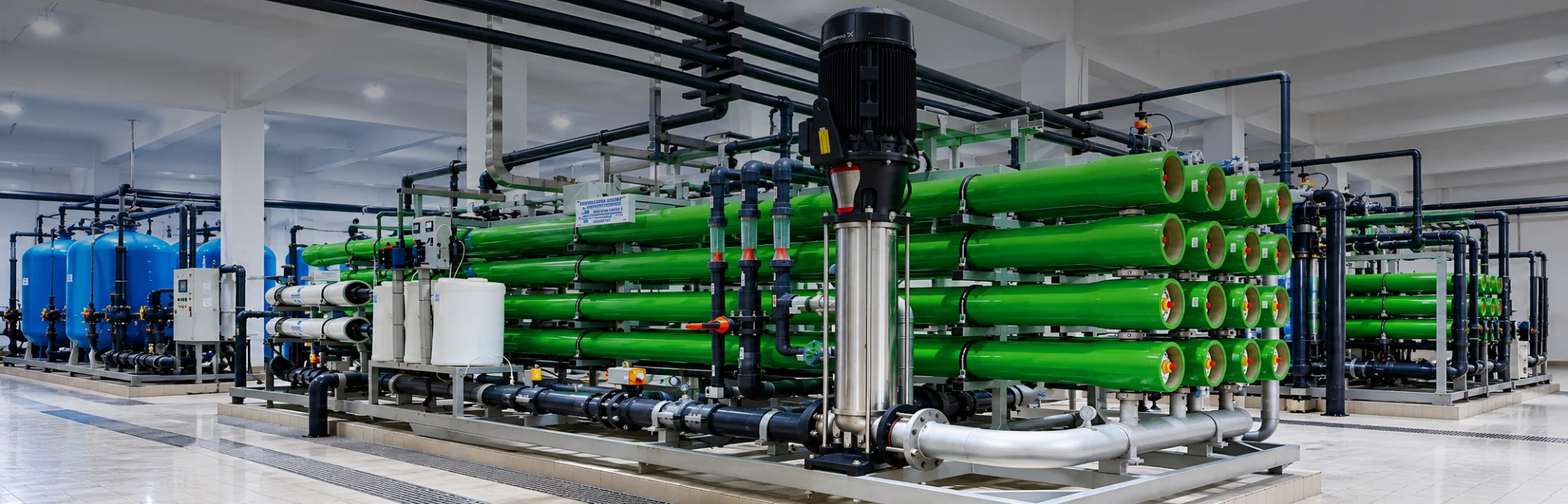
UF membranes provide advanced separation of suspended solids and microorganisms.
Reverse Osmosis
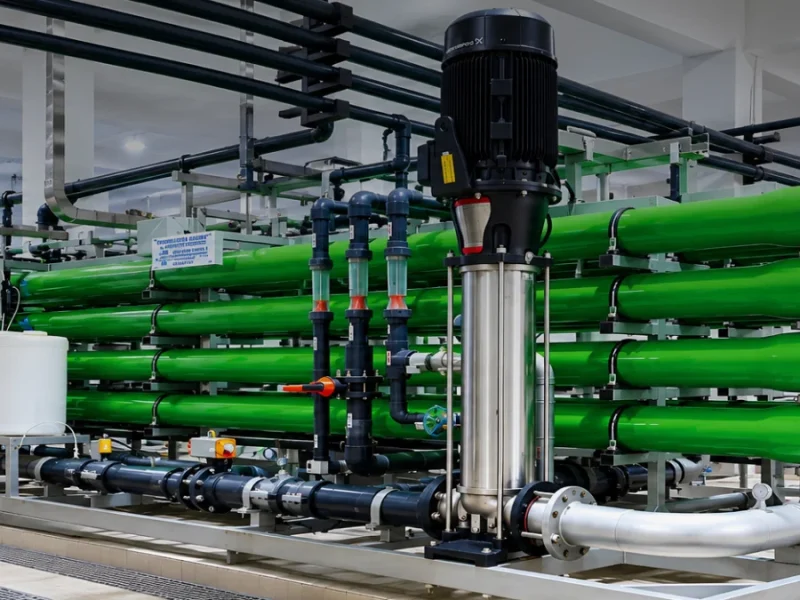
RO is commonly used when substantial dissolved-solids removal is required.
Disinfection
Disinfection may be required to control microorganisms depending on the reuse application.
How Does a Wastewater Recycling System Work?
A simplified water-recycling process may look like:
Wastewater → Pretreatment → Biological Treatment → Filtration → Membrane Treatment → Disinfection → Reuse
However, this is only a general example.
The actual treatment train must be designed according to wastewater characteristics and the required final water quality.
How Much Water Can a Business Reuse?
There is no universal percentage that applies to every facility.
The achievable recovery rate depends on:
- Wastewater characteristics
- Treatment technology
- Feedwater quality
- Required reuse quality
- Membrane recovery
- Concentrate management
- Operating conditions
- System design
A professional feasibility study can estimate potential water recovery for a specific facility.
Wastewater Reuse for Industrial Facilities
Industrial facilities can be strong candidates for water-recycling projects because they may consume substantial quantities of water.
A recycling strategy can investigate where treated water can replace freshwater without compromising product quality or equipment performance.
Possible applications include:
- Cooling
- Process water
- Washing
- Utilities
- Landscaping
Each application should be evaluated individually.
Wastewater Reuse and Compliance
Water reuse should never be based solely on whether the treated water “looks clean.”
Treated water must meet the quality requirements applicable to the intended use.
Saudi Arabia has a regulatory framework for treated wastewater and reuse, while environmental permitting requirements apply to relevant discharge activities. The National Center for Environmental Compliance provides an electronic water discharge permit service for private-sector and other organizations.
How to Start a Water-Reuse Project
1. Measure Current Water Consumption
Identify where freshwater is being consumed.
2. Map Wastewater Streams
Determine which wastewater streams could potentially be recovered.
3. Test the Wastewater
Analyze important physical, chemical, and biological parameters.
4. Identify Reuse Opportunities
Determine where reclaimed water could realistically replace freshwater.
5. Define Required Water Quality
Each reuse application should have a clearly defined water-quality target.
6. Design the Treatment System
Select the appropriate combination of biological, filtration, membrane, and disinfection technologies.
7. Evaluate Economics
Compare capital costs, operating costs, water savings, maintenance, and expected system life.
Wastewater Is Wastewater Recycling Worth the Investment?and Compliance
The answer depends on the facility.
A water-recycling project can become particularly attractive when:
- Freshwater demand is high
- Water costs are significant
- Wastewater volumes are substantial
- Suitable reuse applications are available
- The facility operates continuously
- Long-term water security is a priority
A proper feasibility study is therefore more useful than relying on generic ROI assumptions.
The Future of Wastewater Reuse in Saudi Arabia
Wastewater reuse is closely connected with Saudi Arabia’s broader water-security and sustainability objectives.
The country’s water-sector strategy aims to protect resources while improving wastewater services and encouraging efficient water management.
For businesses, this creates an opportunity to move from a traditional “treat and discharge” model toward a more circular approach:
Use → Treat → Recover → Reuse
Final Thoughts
Wastewater recycling can help Saudi businesses improve water efficiency while supporting responsible environmental management.
However, successful reuse requires proper wastewater characterization, appropriate treatment technology, reliable operation, and compliance with the requirements applicable to the intended use.
A customized wastewater recycling and reuse solution in Saudi Arabia can therefore become an important component of an organization’s long-term water-management strategy.