

Introduction
Saudi Arabia is investing heavily in sustainable water management, wastewater treatment, and water reuse as part of its long-term water-sector development. For industries, commercial facilities, municipalities, hospitals, hotels, and other large water users, wastewater treatment is no longer simply an environmental requirement. It is increasingly an important part of operational efficiency, regulatory compliance, and responsible water management.
A properly designed wastewater treatment solution in Saudi Arabia can help organizations treat contaminated water, meet applicable discharge requirements, recover water for suitable reuse applications, and improve the long-term efficiency of their operations.
What Is a Wastewater Treatment Solution?
A wastewater treatment solution is an engineered system designed to remove physical, chemical, biological, and other contaminants from wastewater before the treated water is discharged or reused for an approved application.
The exact treatment process depends on factors such as:
- Wastewater source
- Daily flow rate
- Pollutant concentration
- Required treated-water quality
- Discharge requirements
- Intended reuse application
- Available space
- Energy requirements
- Operating conditions
- Future expansion requirements
There is no single wastewater treatment system suitable for every facility. A food-processing plant, hospital, hotel, refinery, textile factory, and municipal development can all produce significantly different wastewater characteristics.
Why Is Wastewater Treatment Important in Saudi Arabia?
Water is a strategically important resource in Saudi Arabia. The country’s water strategy focuses on improving water and wastewater services while protecting water resources and the environment.
For businesses, wastewater treatment can provide several practical benefits.
1. Environmental Protection
Untreated or inadequately treated wastewater can introduce organic matter, suspended solids, nutrients, chemicals, oils, and other contaminants into the environment.
Effective treatment helps reduce the environmental impact associated with wastewater discharge.
2. Regulatory Compliance
Businesses need to consider applicable environmental and wastewater requirements when designing, operating, or upgrading treatment systems.
Saudi Arabia provides regulatory mechanisms for wastewater discharge and treated-water use. The National Center for Environmental Compliance provides a water discharge permit service through its environmental permitting system.
3. Water Reuse
Treated wastewater can potentially become a valuable non-potable water resource when it is treated to the quality required for its intended application.
Potential applications may include:
- Landscaping
- Irrigation
- Industrial processes
- Cooling applications
- Equipment washing
- Other approved non-potable uses
The suitability of treated wastewater depends on the required water quality and applicable regulations.
4. Improved Water Efficiency
Recycling suitable wastewater can reduce dependence on freshwater sources and improve overall water efficiency.
For water-intensive industries, this can become an important part of a broader water-management strategy.
Types of Wastewater Treatment Systems
Different facilities require different treatment approaches.
Sewage Treatment Plants (STP)
Sewage treatment plants are designed primarily to treat domestic or sanitary wastewater generated by residential buildings, commercial properties, hotels, hospitals, camps, institutions, and other facilities.
An STP can typically involve several stages, including preliminary treatment, biological treatment, clarification, filtration, and disinfection depending on the required output quality.
Effluent Treatment Plants (ETP)
Effluent treatment plants are designed for industrial wastewater.
Industrial wastewater can contain highly variable contaminants depending on the manufacturing process.
For example, wastewater from textile manufacturing may differ considerably from wastewater generated by food processing, metal finishing, chemicals, or oil and gas operations.
ETP design therefore needs to begin with wastewater characterization rather than simply selecting equipment from a standard catalogue.
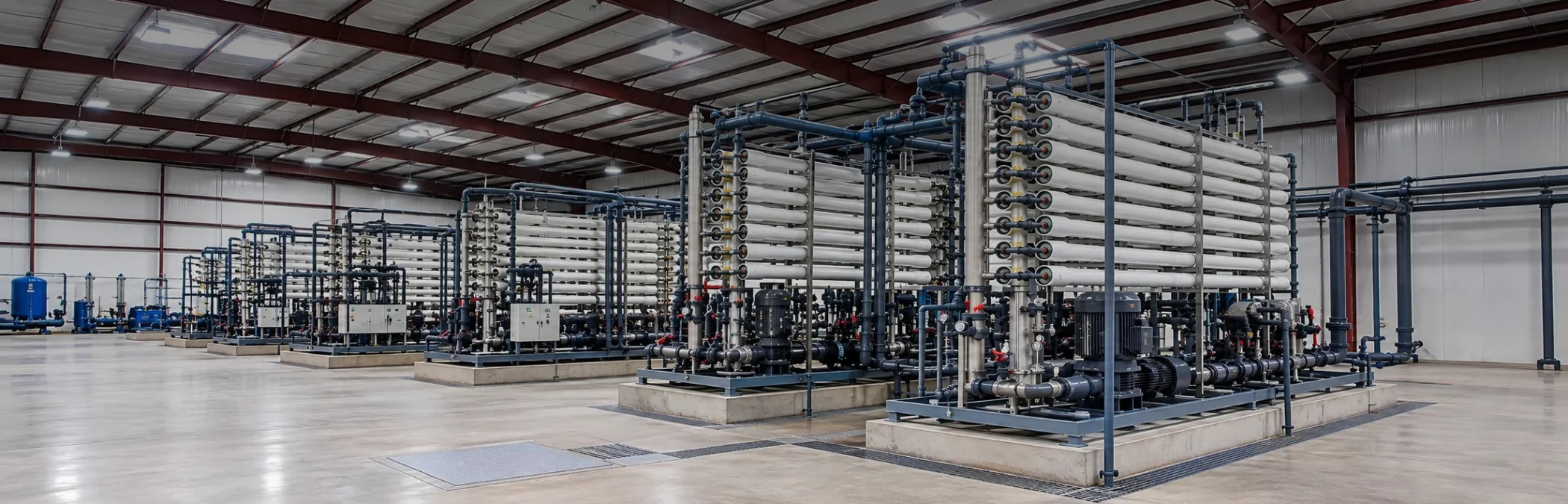
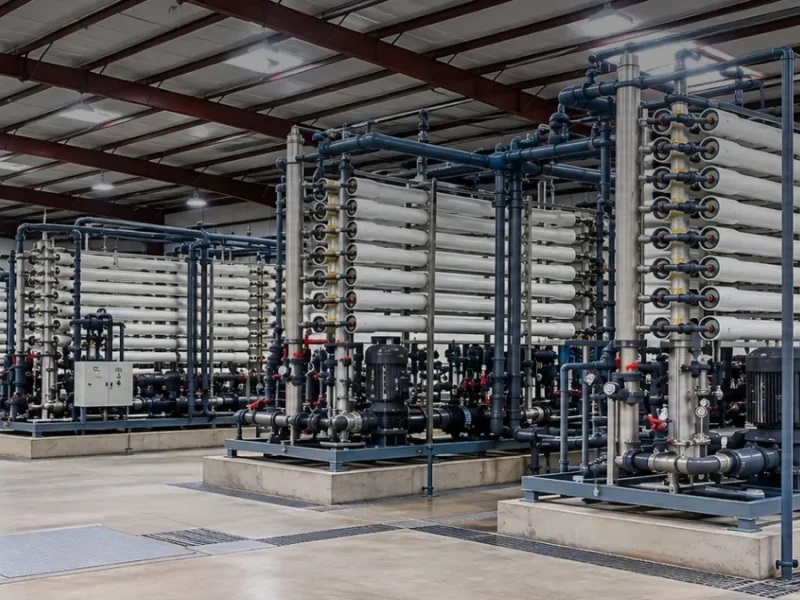
Reverse Osmosis Systems
Reverse osmosis, commonly known as RO, uses membrane technology to reduce dissolved salts and other contaminants from water.
RO may be incorporated into a larger treatment and water-reuse system when the required water quality makes membrane treatment appropriate.
Ultrafiltration
Ultrafiltration uses membranes to separate suspended solids, colloids, microorganisms, and other contaminants from water.
It can be used as part of advanced treatment and water-recycling applications.
Water Recycling and Reuse Systems
Water recycling systems combine appropriate treatment technologies to produce water suitable for an identified reuse application.
The treatment train should be designed according to the source water and the quality required for reuse.
Which Industries Need Wastewater Treatment?
Wastewater treatment is relevant across a wide range of Saudi industries.
Manufacturing
Manufacturing facilities may generate process wastewater containing suspended solids, oils, chemicals, organic contaminants, or other pollutants.
Food and Beverage
Food-processing wastewater can contain significant organic loads, fats, oils, grease, and suspended solids.
Oil and Gas
Oil and gas facilities can generate wastewater containing hydrocarbons, suspended solids, dissolved contaminants, and other process-related pollutants.
Healthcare
Hospitals and healthcare facilities generate sanitary wastewater as well as wastewater associated with various clinical and operational activities.
Hospitality
Hotels, resorts, restaurants, and hospitality developments generate significant sanitary wastewater and may benefit from onsite treatment and reuse strategies.
Municipal and Infrastructure Projects
Large developments and communities may require centralized or decentralized sewage treatment solutions depending on their location, capacity, and infrastructure.
How Is a Wastewater Treatment System Designed?
A professional wastewater treatment project normally starts with understanding the wastewater rather than selecting equipment first.
The process can include:
Step 1: Wastewater Assessment
The source, flow rate, operating schedule, and wastewater characteristics are evaluated.
Step 2: Laboratory Testing
Important parameters may include BOD, COD, TSS, pH, oil and grease, nutrients, salinity, and other contaminants relevant to the application.
Step 3: Treatment Technology Selection
Engineers determine the appropriate combination of physical, chemical, biological, and membrane processes.
Step 4: System Design
The plant is designed according to hydraulic loading, pollutant loading, footprint, required treatment performance, energy consumption, and operational requirements.
Step 5: Installation and Commissioning
Equipment is installed, tested, commissioned, and adjusted to achieve the intended operational performance.
Step 6: Operation and Maintenance
Preventive maintenance, monitoring, troubleshooting, and periodic performance evaluation are essential for maintaining long-term plant reliability.
Why Customized Wastewater Treatment Matters
A common mistake is assuming that a wastewater treatment plant can simply be selected according to daily capacity.
Two facilities with the same wastewater flow can require completely different treatment systems because their wastewater compositions may be different.
For this reason, a wastewater treatment solution should consider:
- Wastewater quality
- Flow variation
- Peak loading
- Required effluent quality
- Reuse objectives
- Space limitations
- Energy consumption
- Sludge management
- Automation requirements
- Future capacity requirements
Conclusion
A reliable wastewater treatment solution in Saudi Arabia should be designed around the wastewater source, required treatment quality, regulatory requirements, operational conditions, and potential reuse opportunities.
From STPs and ETPs to filtration, membrane systems, RO, and water-recycling solutions, the right technology depends on the project.
For organizations across industrial, commercial, municipal, hospitality, healthcare, manufacturing, and oil and gas sectors, professional wastewater treatment engineering can support regulatory compliance, environmental protection, operational efficiency, and sustainable water management.
Looking for a Wastewater Treatment Solution in Saudi Arabia?
Red Sea Arabia provides engineered water and wastewater treatment solutions, including STP, ETP, RO, filtration, water recycling, installation, commissioning, and maintenance support for industrial and commercial applications across Saudi Arabia.
Contact Red Sea Arabia to discuss your wastewater treatment requirements and project needs.